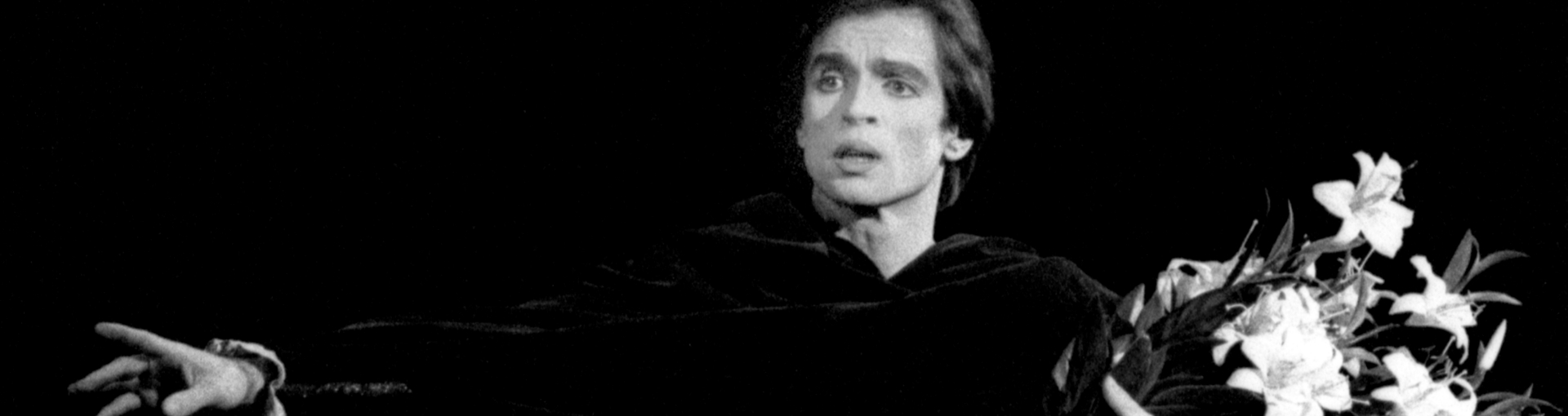
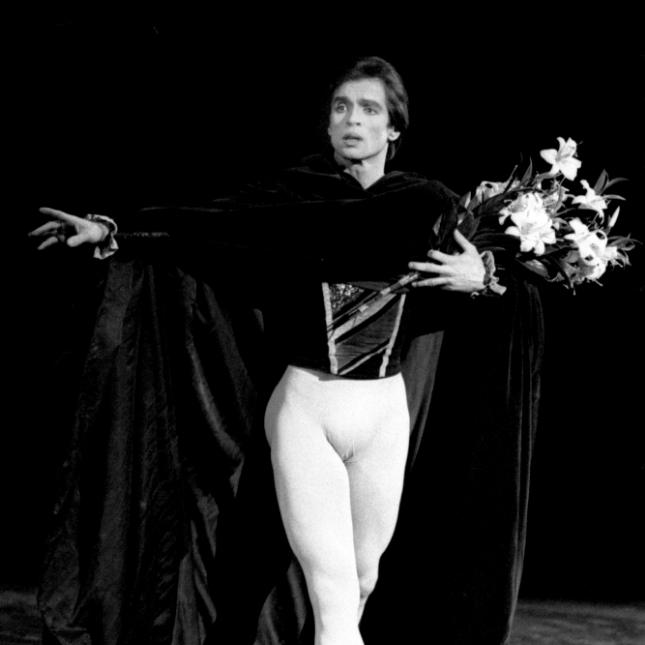
Find out about Rudolf Nureyev's grave in the Russian Cemetery at Ste-Geneviève-des-Bois
In his will and a series of instructions prior to his death, Rudolf Nureyev bequeathed all his tangible and intangible property to his Foundation and gave the trustees the final decision on where his body should be laid to rest. The Russian Orthodox Cemetery was an obvious choice: close to Paris and, since its establishment in 1879, the final resting place of notable Russian émigrés and artists, including the dancers Mathilde Kschessinska, Olga Preobrajenska and Serge Lifar.
The burial took place on 12 January 1993. It followed a civil ceremony and a remarkable event at the Palais Garnier incorporating a guard of honour made up of students from the Paris Opéra ballet school, tributes from French Culture Minister, Jack Lang, readings and orchestral extracts. Nureyev’s coffin was carried in and out by a sextet of dancers, to the accompaniment of Mahler’s Wayfarer songs.The extraordinary monument that marks the grave was designed by Ezio Frigerio, who had created sets for so many of Nureyev’s choreographies. It was built by the Paris Opéra set department. Richly coloured and exquisitely rendered, the mosaic is inspired by the oriental kilim rugs that Nureyev loved, and which adorned his homes. It was unveiled on 6 May 1996.
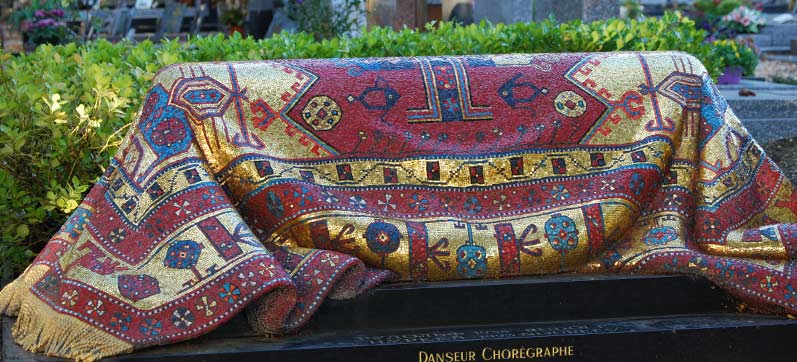
The Russian Cemetery is open to visitors, with information about directions and access times available on the Cemetery’s website.
If visiting the grave, please be aware that despite regular maintenance, exposure to the elements over 30 years has led to severe deterioration. A significant programme of restoration is now underway.
The Rudolf Nureyev Foundation is working with The Committee for the Maintenance of Russian Orthodox Graves at the Cemetery to undertake the necessary structural analysis and develop a repair protocol that will preserve the grave for the future. This programme of work, which requires approval from relevant authorities, is likely to last for up to two years.