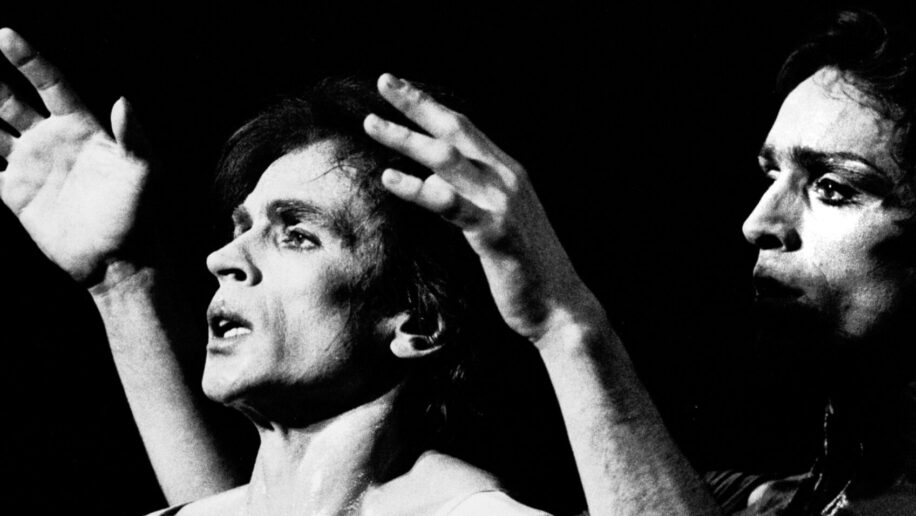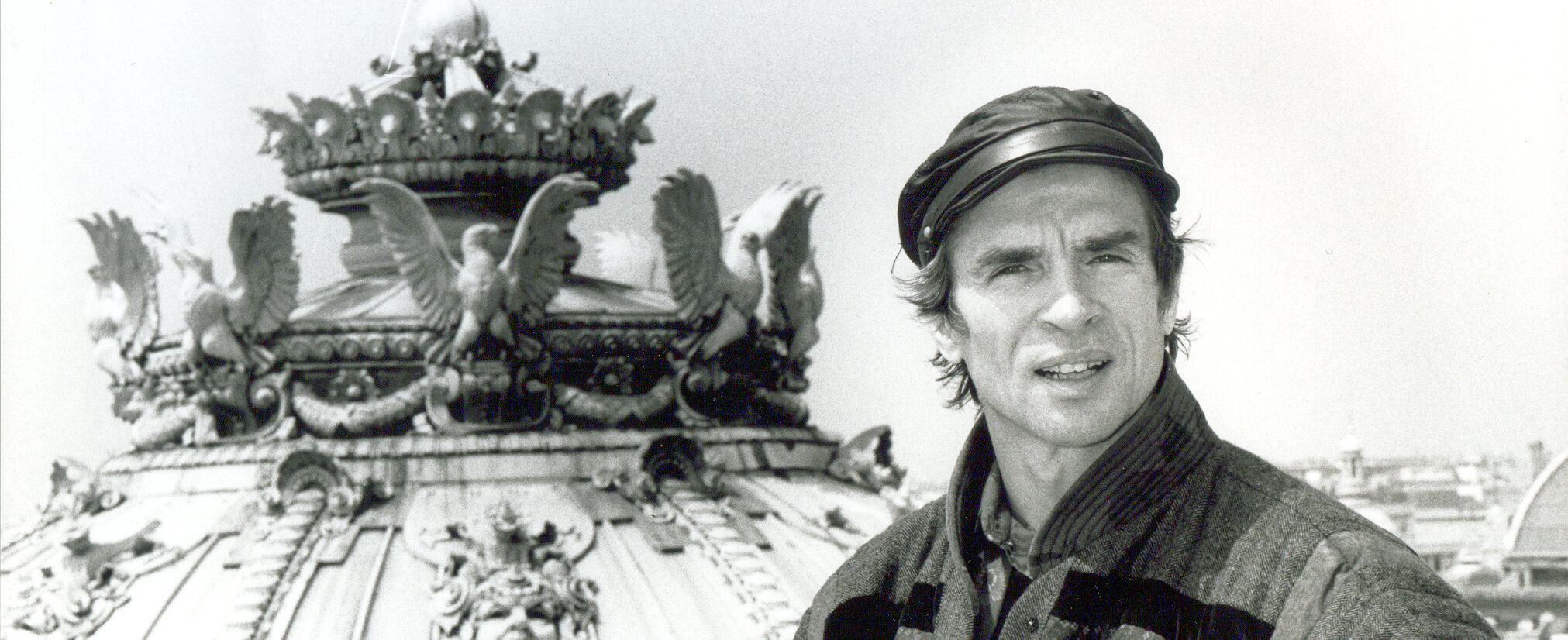
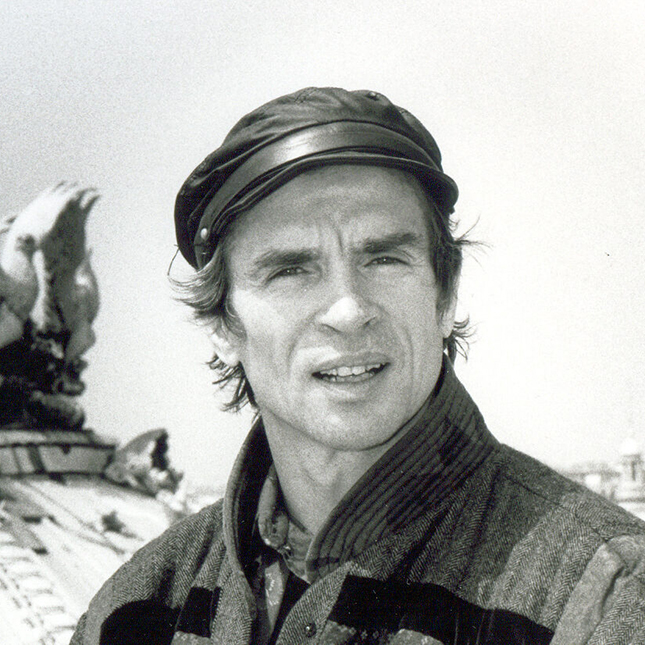
Julie Kavanagh writes about the years between 1983 and 1990, and Rudolf Nureyev’s impact as director of the Paris Opéra Ballet.
“He’ll know a good choreographer when he sees one, he’ll know a good teacher, and above all things, he’ll know a good dancer.”
Dame Ninette de Valois
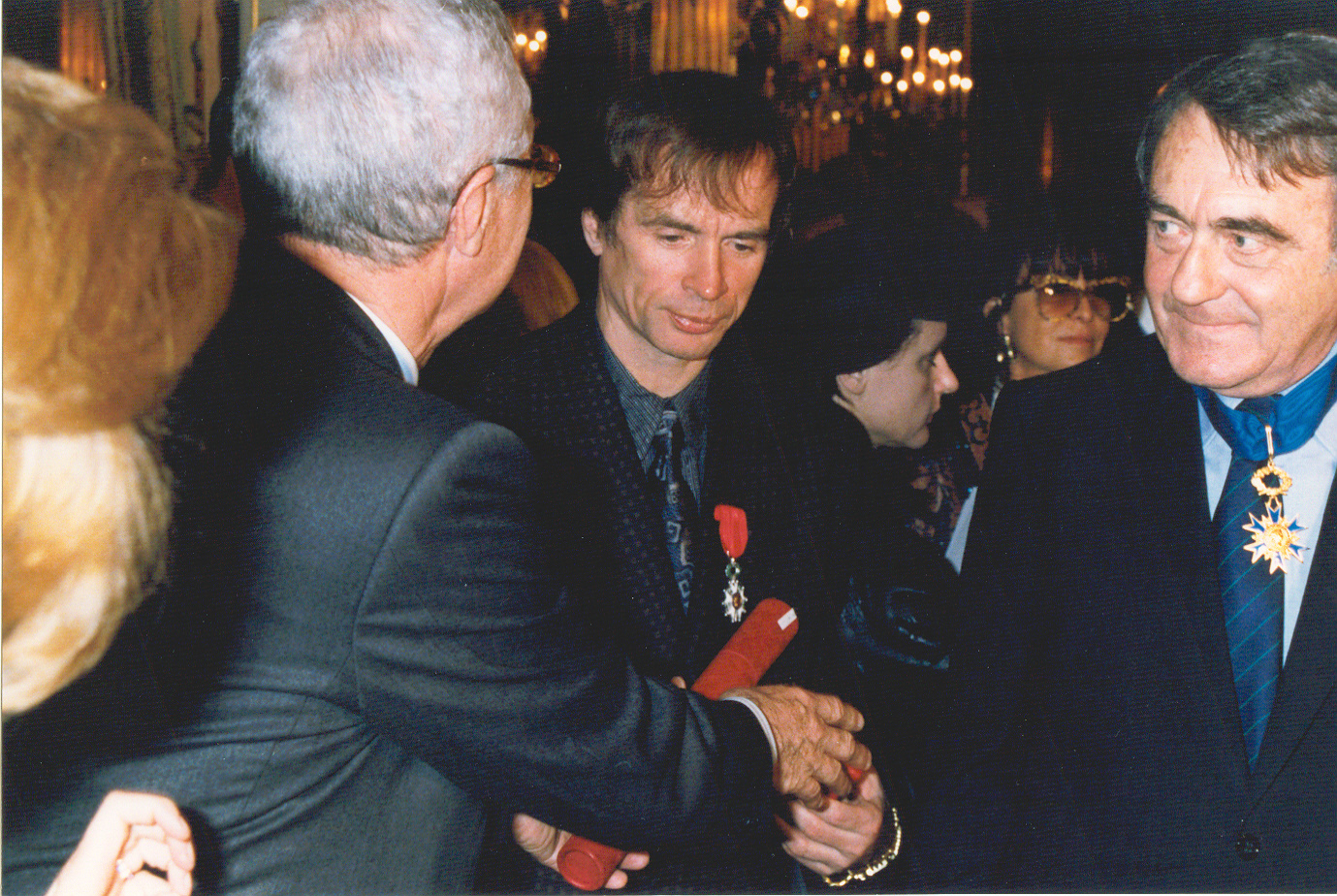
‘He’ll be a director’, declared The Royal Ballet’s Ninette de Valois. She was right, of course, as right as she had been when she predicted the historical Fonteyn/Nureyev partnership. His directorship of Paris Opéra Ballet in 1983 was no radical change in direction for Rudolf: ever since coming to the West he had been regenerating every company he joined, enriching their classical repertory and nurturing outstanding young talent.
In Paris, Rudolf had spotted half a dozen potential stars but promoting them meant overthrowing the Opéra’s infamous hierarchy. He began breaking rules by using Vienna Opera Ballet as a workshop for his discoveries – Laurent Hilaire, Manuel Legris, Charles Jude, Elisabeth Maurin, Isabelle Guerin and Sylvie Guillem: les Chouchous de Noureev, as they were known – teacher’s pets – who would accompany Rudolf to perform galas abroad or seasons of Nureyev and Friends. Guillem was his prize protégé, her extraordinary flexibility – a miracle of spatial harmony – liberating the confinements of the human frame, her explosive personality matching his own. Making Paris Opéra history, Rudolf nominated Guillem as première danseuse and then étoile within the space of a few days. ‘He knew the importance of time’, she said. ‘Because dancers don’t have the time.’
Rudolf’s vision of a repertory comprising ‘fifty-fifty classical and contemporary work’ was more pioneering that it may seem. Apart from performances of a splinter group, there had been no modern dance at the Opéra for decades (Martha Graham’s only season in 1950 closed on its second ‘excruciating night’). Rudolf was determined to educate audiences to appreciate the avant-garde, but his immediate concern was to restore to France its own neglected genius – Marseille-born Marius Petipa.
He began with the three act Raymonda as a showcase for the whole company. Etoiles were taken aback to find themselves in a studio with the corps de ballet, some cast in secondary roles to make way for les Chouchou, but every dancer felt a renewed sense of motivation.‘With Rudolf, we became a team’, said ballerina Elisabeth Platel.
It was all too good to last. Paris Opéra’s union regulations and its invasive administration became intolerable to Rudolf, as his second-in-command, Thierry Fouquet, recalls. ‘He didn’t understand the rules, the bureaucracy, and in particular the union regulations which you have to take seriously in order to run a company as big as this.’ Infuriating too, was the opposition Rudolf faced over his insistence that Bournonville and Balanchine methods form part of the school curriculum. ‘Nobody’s dying to delve into my baggage of knowledge.’ Frustration made him explode, once fracturing the jaw of a teacher who had infuriated him. The company had never been subjected to this kind of aggressive leadership: 150 dancers went on strike, confronting their director in a studio to voice their grievances. Much as he admired the young dancers for standing up to him, Rudolf would not forgive the disloyalty of even his chosen few.
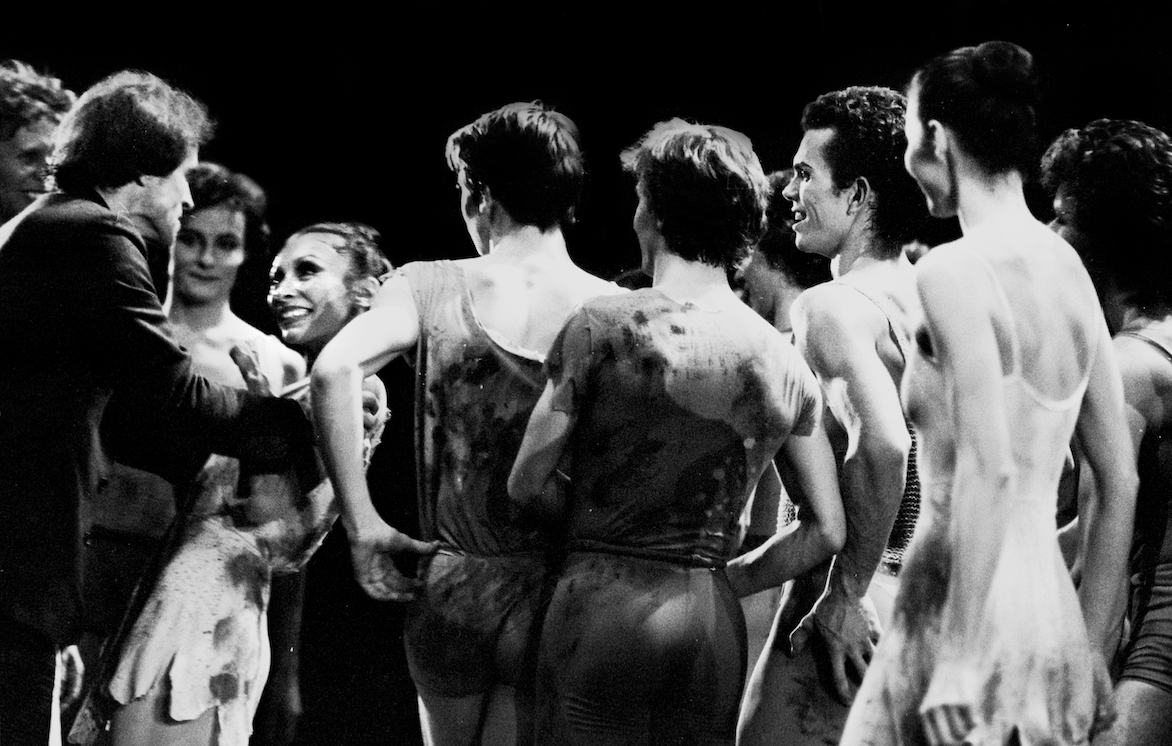
Two choreographers sacrosanct in France, Maurice Béjart and Roland Petit, joined forces to oust him from his position, Petit publicly accusing Rudolf of being a ‘phantom of the Opéra’ because he was away so often fulfilling his own dance engagements. It was true that Rudolf put his hunger to perform before his commitment to the company, but his directorship had brought returns beyond imagining. He had introduced classical masterpieces from Ashton, Balanchine, MacMillan, Tudor; and enticed world-famous innovators to Paris – an astonishing range including Martha Graham, Merce Cunningham, Paul Taylor, Karole Armitage, Lucinda Childs, William Forsythe, the English wild child Michael Clark and theatre director Robert Wilson. To prove his commitment to French ballet, he had asked Béjart and Petit to return to the Opéra and set aside his personal antipathy towards dancer/choreographer Serge Lifar (a Palais Garnier legend), by staging a homage to him.
Rudolf’s final gift to the company was the Russian classic he had always wanted to bring to the West – a full-length production of La Bayadère, in October 1992. Not only did the French libretto bring the ballet back to its own country but it had also become a parable of sorts, replaying Rudolf’s unhappy relationship with the Paris Opéra: ‘A love story which ended badly. It’s a betrayal’.
During its preparation the dancers, even those who had opposed him, worked harder than ever before: they wanted to make up for the conflicts of the past, and more pressing was a race against time. Rudolf’s 1984 AIDS diagnosis had become tragically obvious: he was dying before their eyes. At the general rehearsal, he lay watching on a divan in the wings but was able to shuffle onstage for the final curtain call of the first performance, supported either side and swaddled in a shawl and bonnet. Not believing what they were seeing, the audience was silent for several seconds before the explosion of their ovation broke. Mario Bois, Nureyev’s friend and licensing agent, wrote:
We were attending a tragic miracle. On this same stage; where, thirty-one years earlier, an unknown young man had flung himself into his variations from La Bayadère, this evening the great Nureyev was giving us his Bayadère to say good-bye.
The restaging of the ballet on 29 January 1993, a fortnight after Rudolf’s funeral, had ‘a kind of doomsday feeling’, the hypnotic repetition of the corps de ballet’s long, slow act three entrance like the dirgelike ritual of a Roman Catholic procession. And yet, there were many who found consolation that night: the transcendental impression left by the Shades – pure classicism that goes on and on forever – was Rudolf’s idea of heaven. But the greatest solace was his presence in the very qualities he had instilled – the lush St Petersburg plastique of the women, the taut strides, electric presence, and imperious port de bras of the men. La Bayadère’s Solor, Laurent Hilaire, whom Rudolf had formed in his image, remembers feeling blessed. ‘I left the stage overjoyed, and told myself, “What luck! We are always with him”.’
Read on to find out about Rudolf Nureyev’s lasting impact on dance and dancers.
Legacy: Timid is not Interesting
Read the article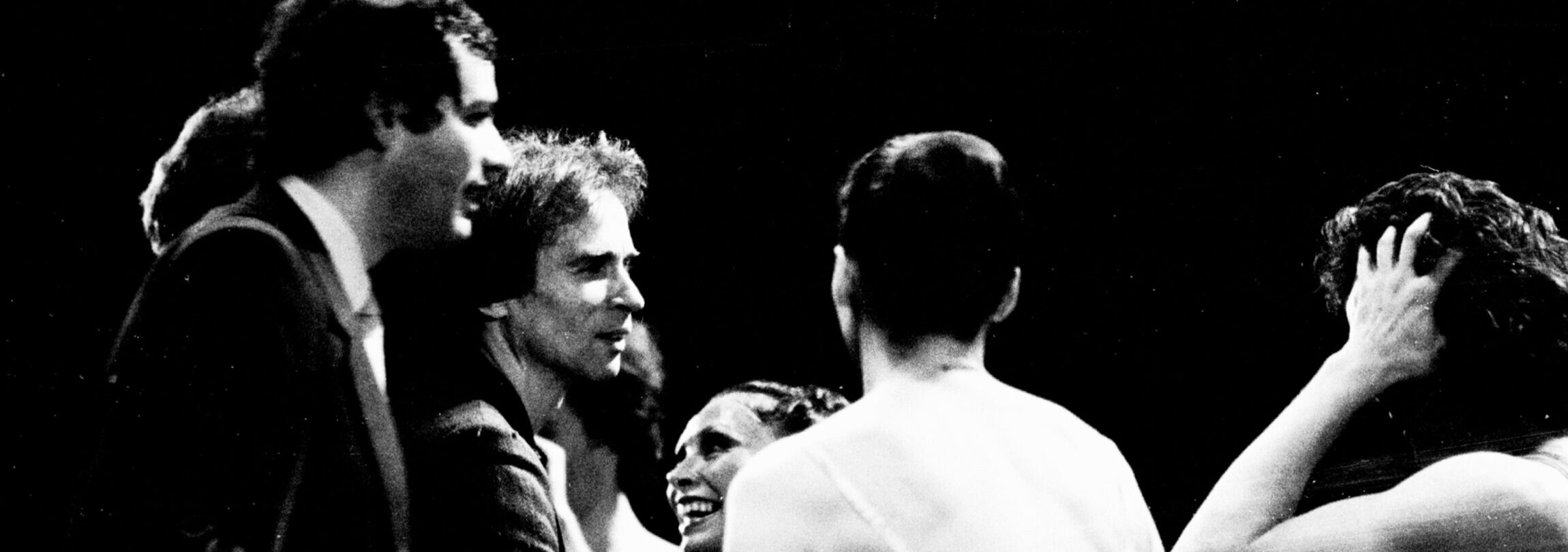
The Russian Years: Lilac from the Gods
The Defection: No Running, No Jumping
Erik Bruhn: The Burn of Ice
Nureyev and Fonteyn: A Taming of Sorts
The Royal Ballet Years: The Cuckoosha
The Sixties: Rudi Mania