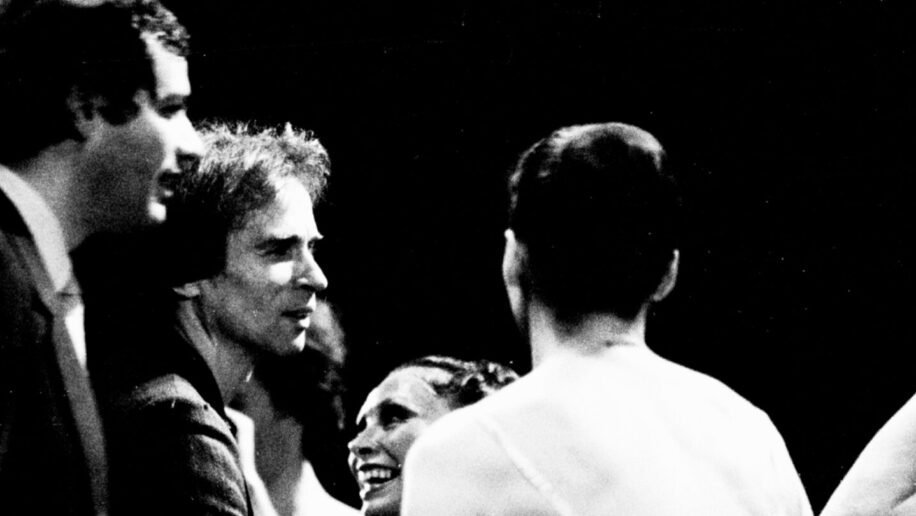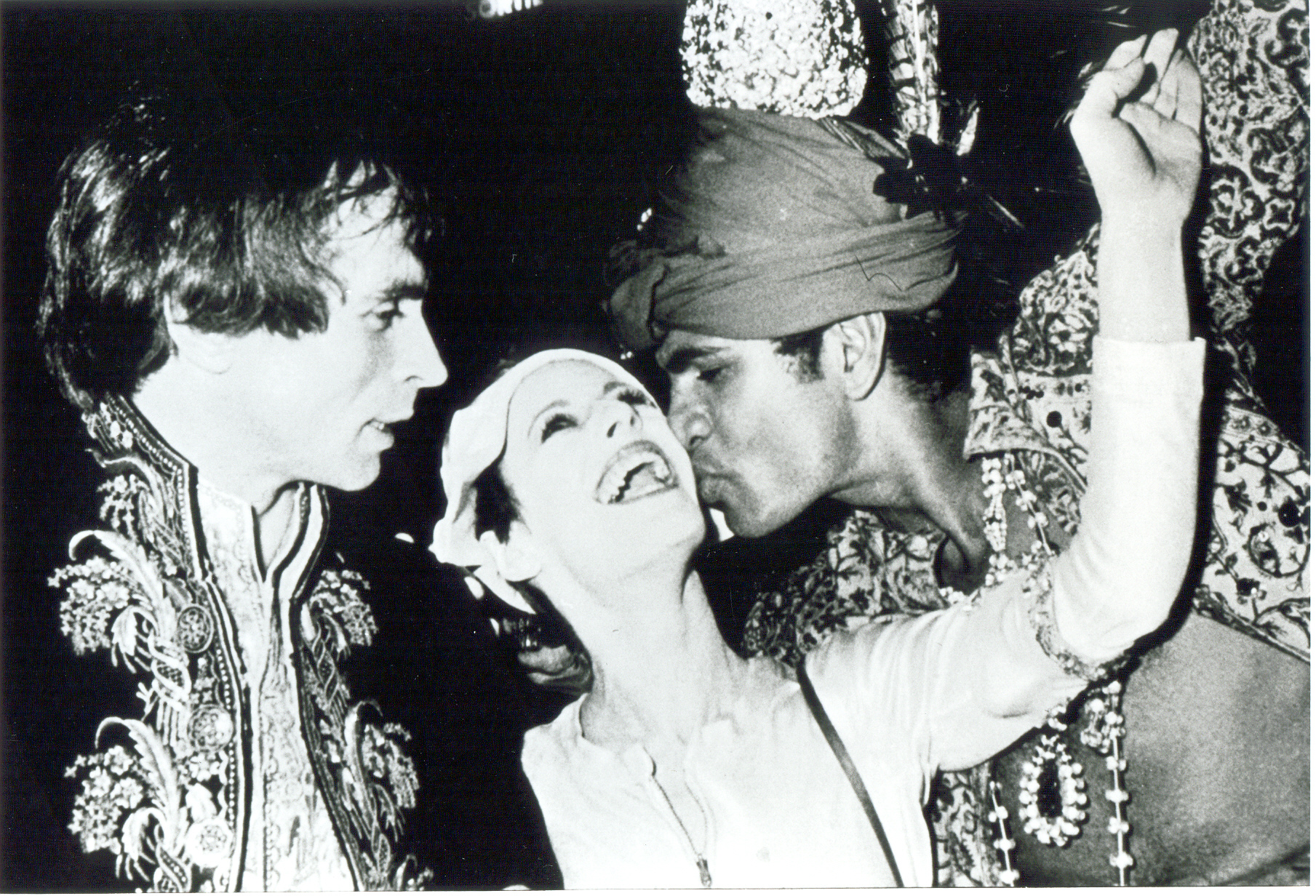
Julie Kavanagh writes about Rudolf Nureyev’s global celebrity and his jet-setting life throughout the 1960s.
Aware of stirring up jealousy among the dancers during Rudolf’s first New York season at the Metropolitan Opera House in 1963, the Royal Opera House head, David Webster, decided to ‘play him slowly’. At the traditional opening performance of The Sleeping Beauty, Margot’s partner was David Blair; no casts were advertised in advance and there was no star billing. Naturally, though, it was Rudolf that everyone wanted to see.
His Met debut, with Fonteyn in Giselle on 25 April, not only replayed the Paris response of May 1961 – ‘People stood and screamed – yes, screamed’. It demonstrated the collective hysteria that defined the decade’s new audience for ballet. It was the squealing groupiedom amplified a year later by the Beatles, Rudolf having joined the New Aristocracy of pop stars, actors, photographers, models, hairdressers –even villains – whose celebrity and youth cut across the class divide.
Spotted at Andy Warhol’s ‘Fifty Most Beautiful People’ party, or photographed frugging at Arthur’s disco, he was as much of a trend-setter as Twiggy, a spruce English mod, wearing boots thigh-high with a matching ponyskin jacket. Courrèges dressed him in a white canvas raincoat; he appeared in striped bathing trunks on the cover of Men in Vogue; and he was featured – simultaneously – on the covers of both Time and Newsweek. Roland Petit’s 1967 Paradise Lost, a vehicle for him and Margot, merged ballet with sex, disco culture, op artand high fashion, a vinyl miniskirted Margot transfigured into a Kings Road dollybird. Mick Jagger was so dazzled by the spectacle of Rudolf diving through a backcloth of huge red lips that he borrowed the design for his record logo.
Nothing like Rudimania had existed in ballet before. In London, the teenagers among the post-performance crowd jostling elbow to elbow along upper Floral Street, chanted, ‘We want Rudi, preferably in the nudie!’. New York fans bedded down in the subway tunnel to be first in line for tickets, and by morning there would be more than a thousand – a ‘hierarchy with secret, group rules’ – waiting for the box office to open. Mounted police were brought in to prevent Rudolf from being mobbed as he left the stage door.
While on tour in LA in 1967, the Summer of Love, their after-show appearance at a Haight Ashbury ‘freak-out’ was raided by police causing headlines to blare ‘BALLET STARS BUSTED IN POT PARTY’. Filmed waiting to be put in the cells, Rudolf gives one of his sexiest performances. Staring at the lens with utter contempt, he modulates his glare with shades of hauteur, irony and flirtatiousness, signalled by a barely perceptible wink.
The Fonteyn/Nureyev blaze had dimmed by the end of the decade. The extraordinary resurgence that Rudolf instigated in Margot– by now, approaching 50 – was waning, and she found it a strain to keep up with him. Expecting autonomy in a ballerina, he was ‘browned off’ by her dependence on his partnering and had begun to distance himself. By 1968, not only had his lodestar’s light dimmed, but almost simultaneously, his love affair with Erik had ended. It can be no coincidence that trained eyes began seeing a deterioration in Rudolf’s classical flawlessness. The time had come for a change.
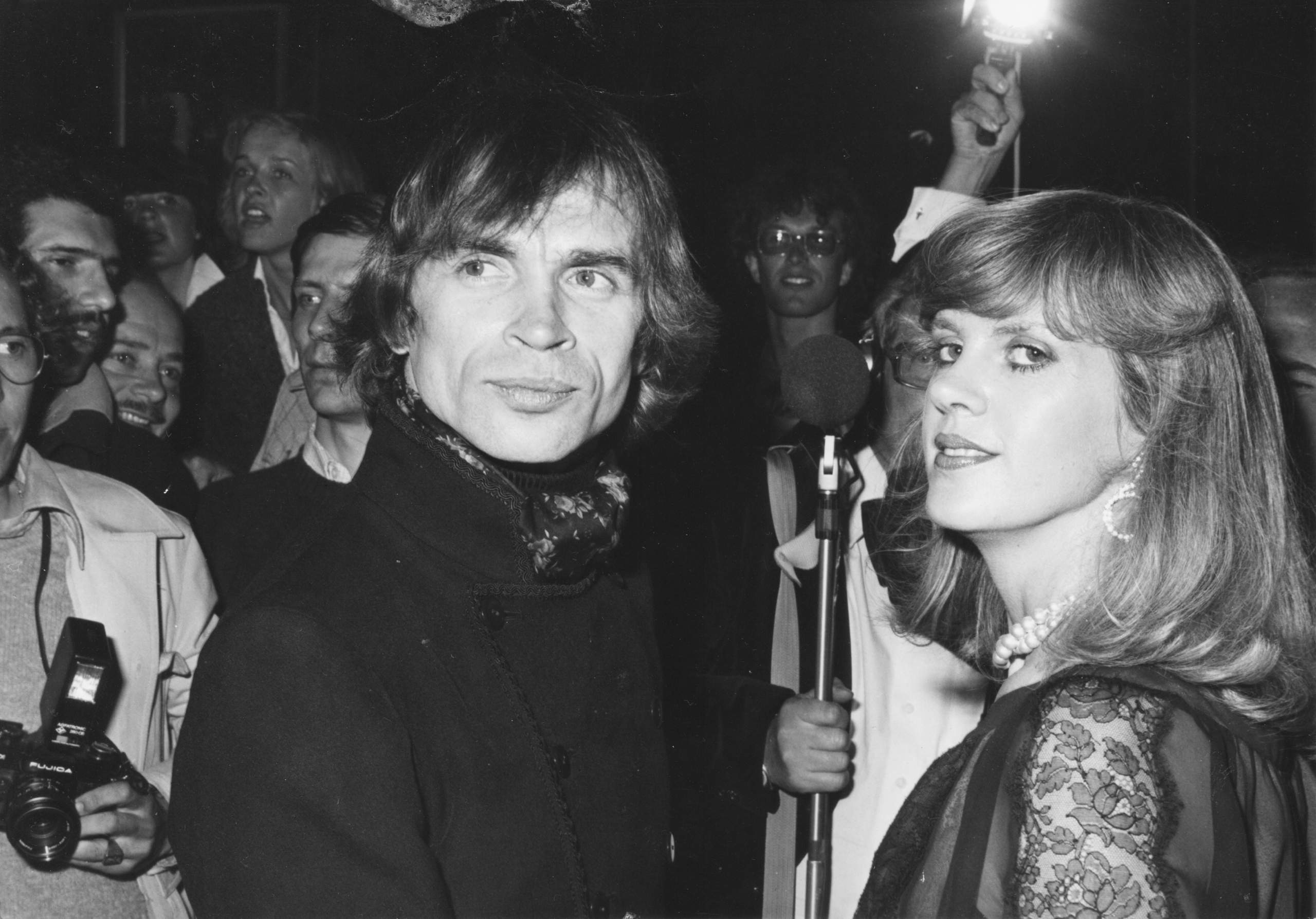
Read on to find out about the 1970s and how Nureyev pushed the boundaries of his technique into modern dance.
The Seventies: Gate Crashing
Read the article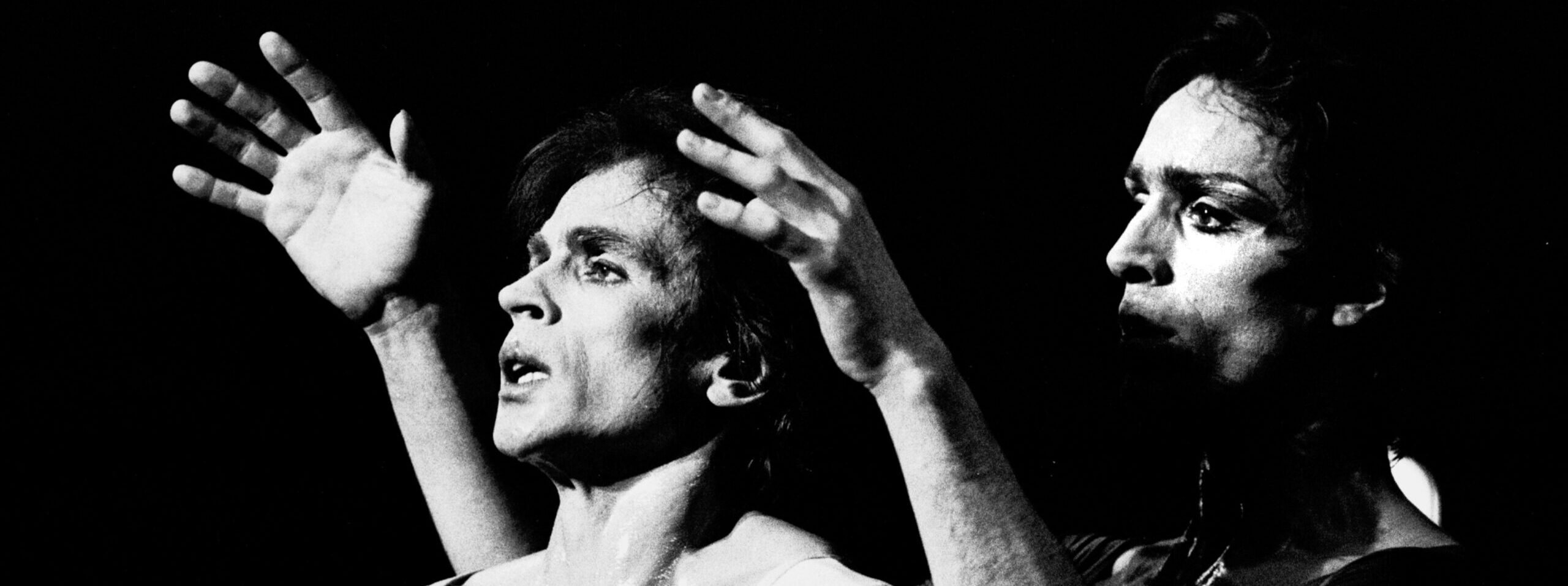
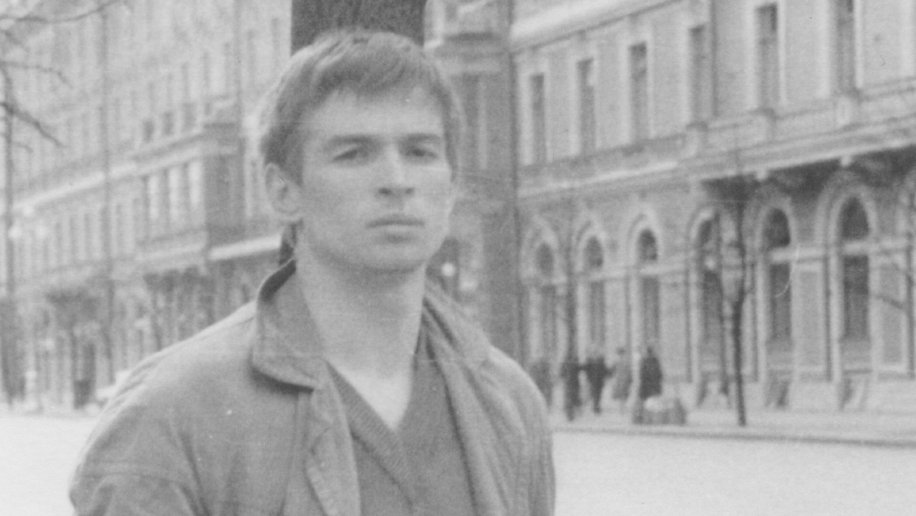
The Russian Years: Lilac from the Gods
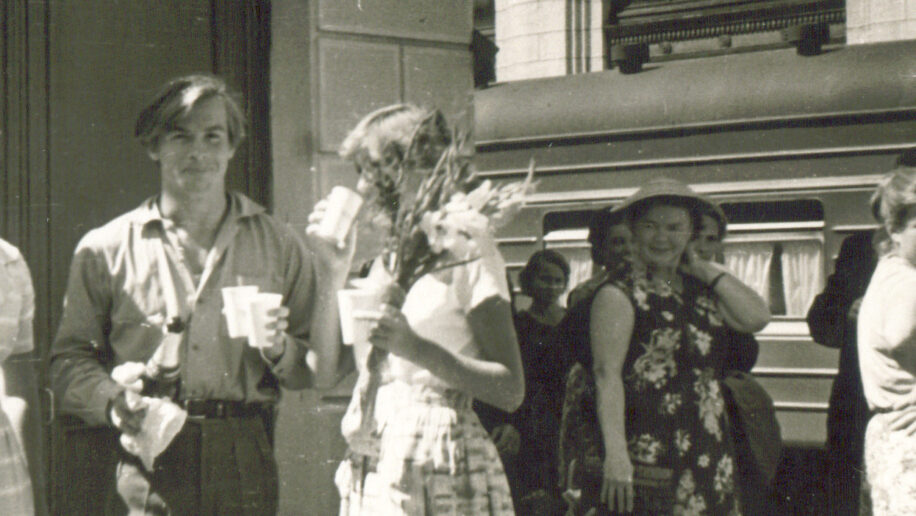
The Defection: No Running, No Jumping
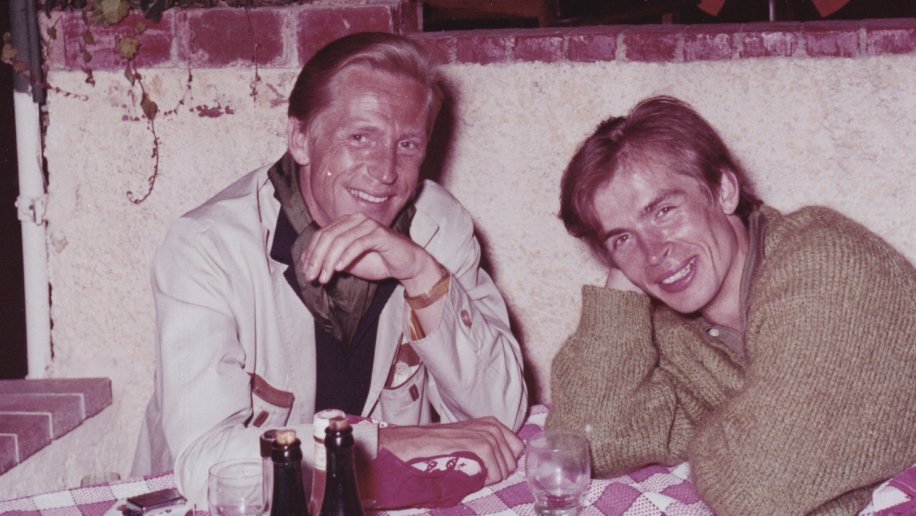
Erik Bruhn: The Burn of Ice
Nureyev and Fonteyn: A Taming of Sorts
The Royal Ballet Years: The Cuckoosha
The Paris Opéra Years: Baggage of Knowledge