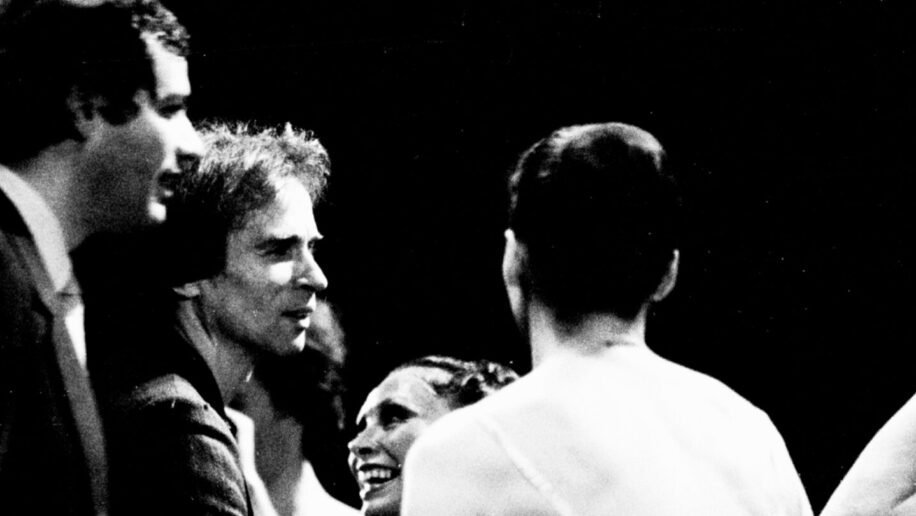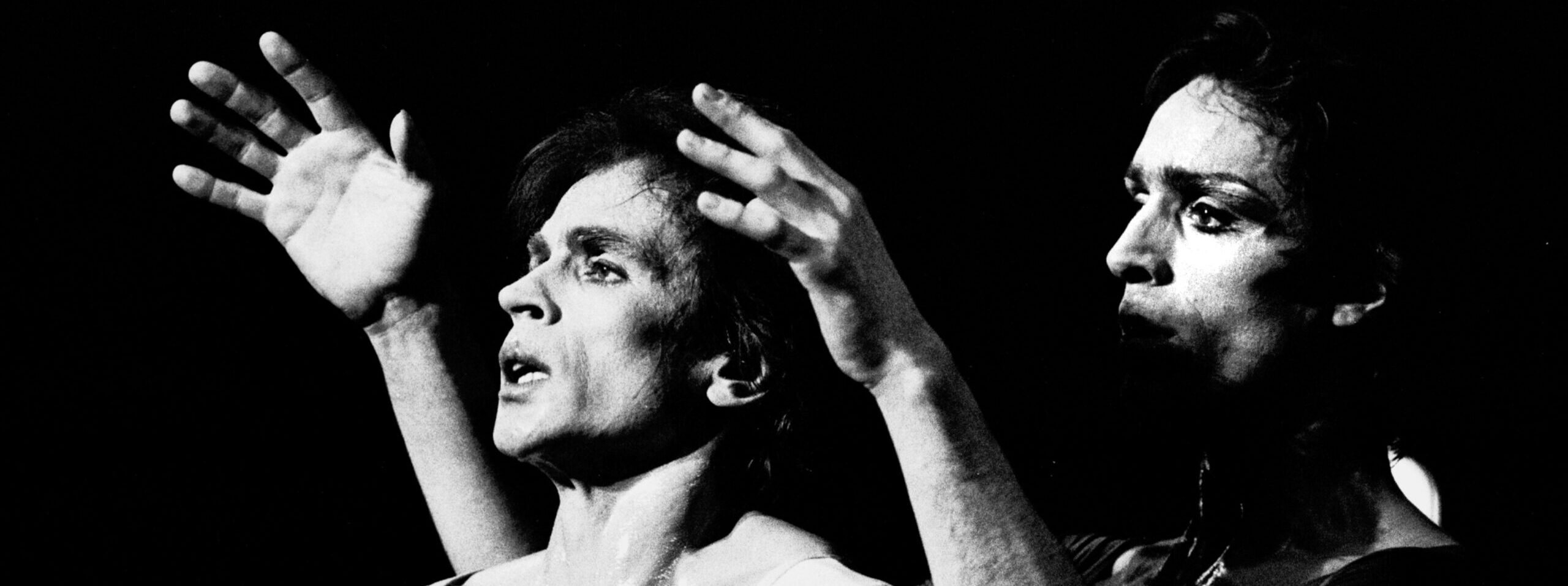
Julie Kavanagh writes about the 1970s and Rudolf Nureyev’s ground-breaking forays into modern dance.
Rudolf Nureyev’s dream in the early Sixties had been to spend eight months of the year with The Royal Ballet and two with New York City Ballet, working with George Balanchine, the choreographer he revered more than any other in the world. But not even Rudolf could make this happen. Ballerinas, not male dancers, were Balanchine’s inspiration, and a male star was an abomination to him. Knowing that someone of Nureyev’s fame would drastically destabilize his company, Balanchine spurned his overtures.
“He’s a one-man show, “I, me, a beautiful man alone”... Frankly we don’t need this.”
George Balanchine
So, Rudolf looked elsewhere. He wanted a new language to explore ‘more complex things’, to reach into his inner being and discover a different aspect of himself. Once again, he decided to cross from a familiar to an alien world, this time as the first ballet star to ‘crash the gates’ of modern dance.
Rudi van Dantzig, the young director/choreographer of Dutch National Ballet, was his first tutor. When they worked together in Amsterdam in 1968 on Monument for a Dead Boy, Rudolf was unrelentingly driven, inflecting each movement with such exertion that it seemed ‘followed by an exclamation mark, as it were’. With Paul Taylor two years later, Rudolf again pushed himself mercilessly, struggling and failing ‘to switch over, to drop ballet habits that were so ingrained’. He found the experience chastening, ‘You just can’t put other clothes on, you have to know in your bones’. Nevertheless, he was determined to persevere.
This meant getting The Royal Ballet to ‘dust down’ its audiences by commissioning contemporary pieces for him. The first, van Dantzig’s Ropes of Time to a stark electronic score, made no impact, although many conceded that it was an adventurous new direction for an ‘establishment’ company to take. When no further work was forthcoming, Rudolf decided to take control: ‘Get off your ass; go, telephone, provoke, make performance somewhere else’.
He went to Brussels to work with Maurice Béjart on a duet to Mahler’s Songs of a Wayfarer, and to New York with Margot Fonteyn to create Martha Graham’s Lucifer. This was dismissed as ‘a passable portrayal in a Graham work which is itself barely passable’, and by Rudolf as ‘a publicity stunt’, but his association with Graham carried on with performances of her few master roles for men. He had put his faith in contemporary dancing as a way of extending his performing career, and by the time he collaborated with the choreographer Murray Louis, he was ‘a pretty old dog’, Louis said. ‘Misha came to this technique when he was much younger.’
Mikhail Baryshnikov was ‘the new boy in town’, whose trajectory since defecting to the West disconcerted Rudolf because it was so similar to his own. But there was more to it than that. The pride of Alexander Pushkin, Baryshnikov was not only born with the classical purity to which Rudolf had always aspired, he possessed the ease of execution that allowed him to make a seamless transition to modern dance. ‘It’s a different lightness and breakup in the body that Misha intuitively understands’, said Glen Tetley, a moderniser of ballet, whose 1972 Laborintus was created for Nureyev. To Rudi van Dantzig, the classical dancer was always visible in Rudolf, and the French ballerina, Violette Verdy, agrees. ‘He adapted himself, but only up to a point… At the core it was still the great Nureyev doing that thing… His identity was too well established. He conjugated; he didn’t disappear.’
And yet, this decade of exposure to modern dance had been transformative for Rudolf. With Songs of a Wayfarer, he had the signature piece he wanted to ‘take everywhere’, while his engagement with New York’s Loft Scene proved his openness to the most extreme experiments in post-modern dance. More crucial, though, was his own experience of learning challenging new techniques. What Paul Taylor had taught him about the contrast between an ‘ethereal, uplifted, open’ torso and waist-down gravitation to the floor had given him the feeling in his own body that he needed to convey the movement to another dancer. He had acquired a lifetime’s mastery of different styles, techniques, artistry and stage craft – an evolution in himself that he now wanted to pass on.
Read on to find out about Rudolf Nureyev’s years as director of the Paris Opéra Ballet.
The Paris Opéra Years: Baggage of Knowledge
Read the article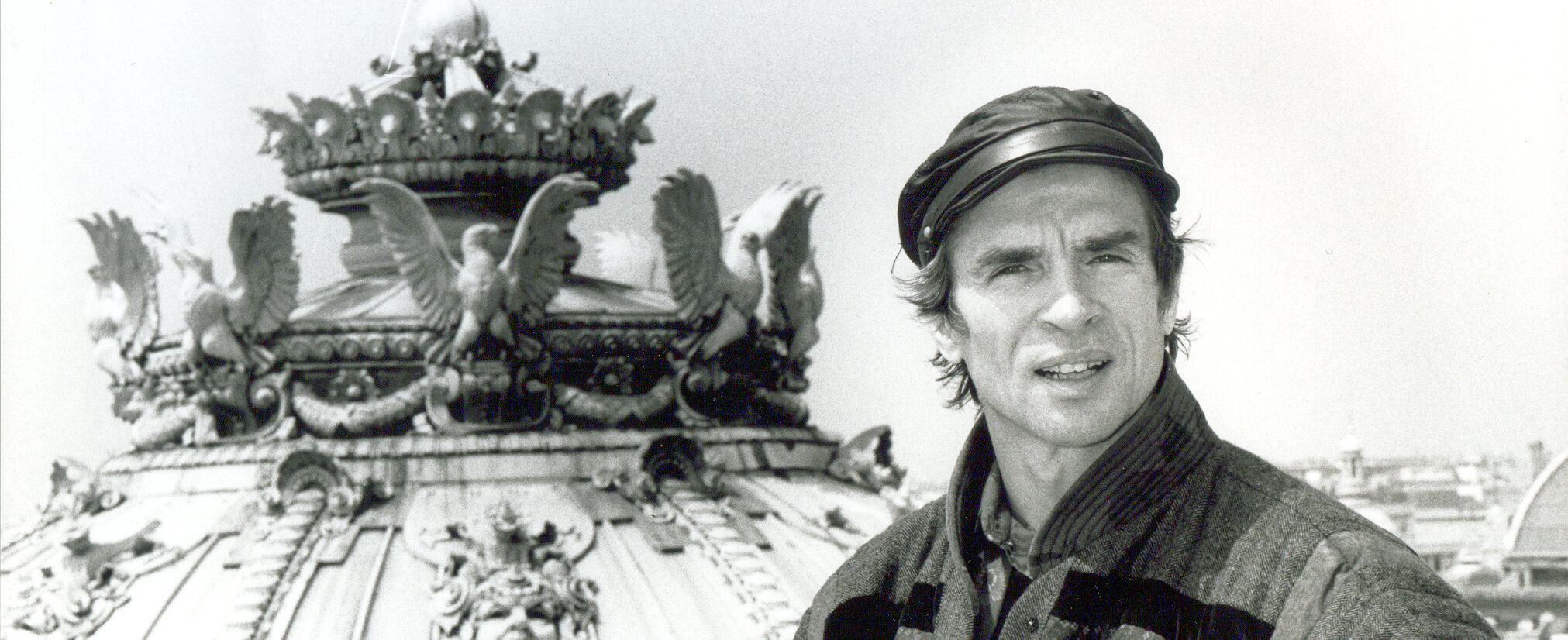
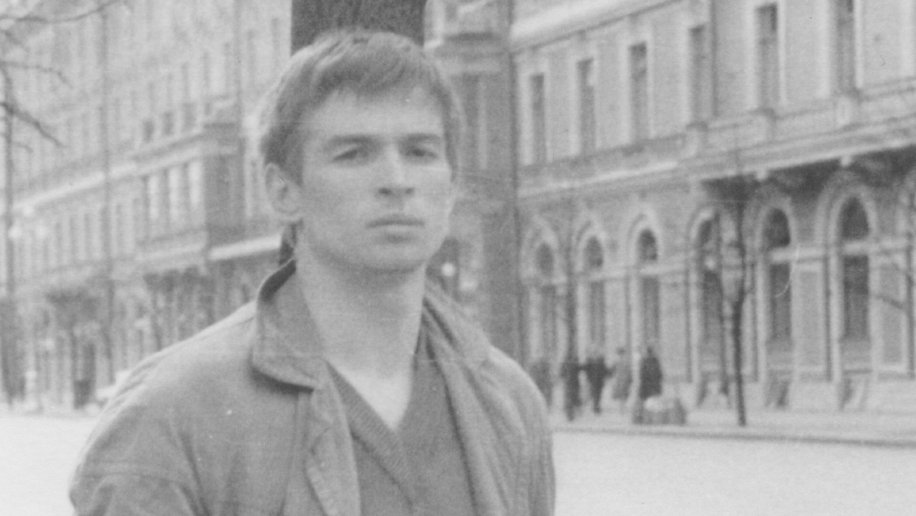
The Russian Years: Lilac from the Gods
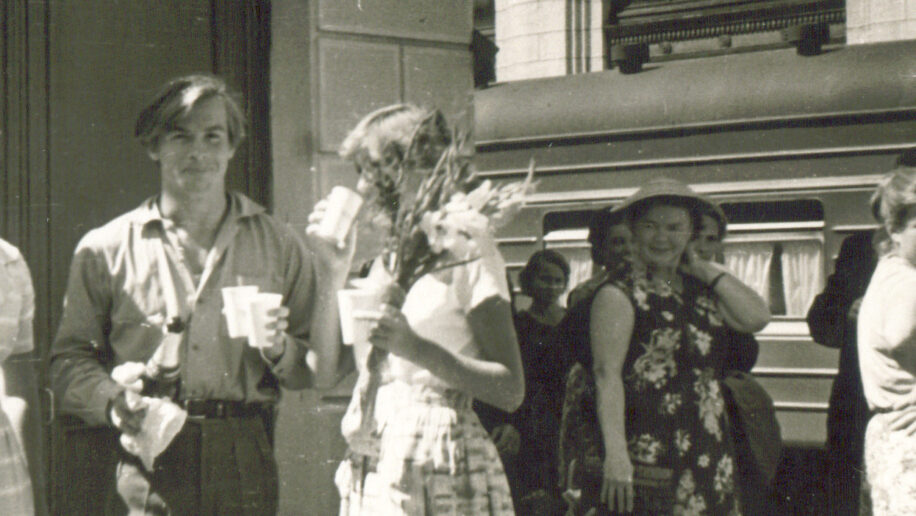
The Defection: No Running, No Jumping
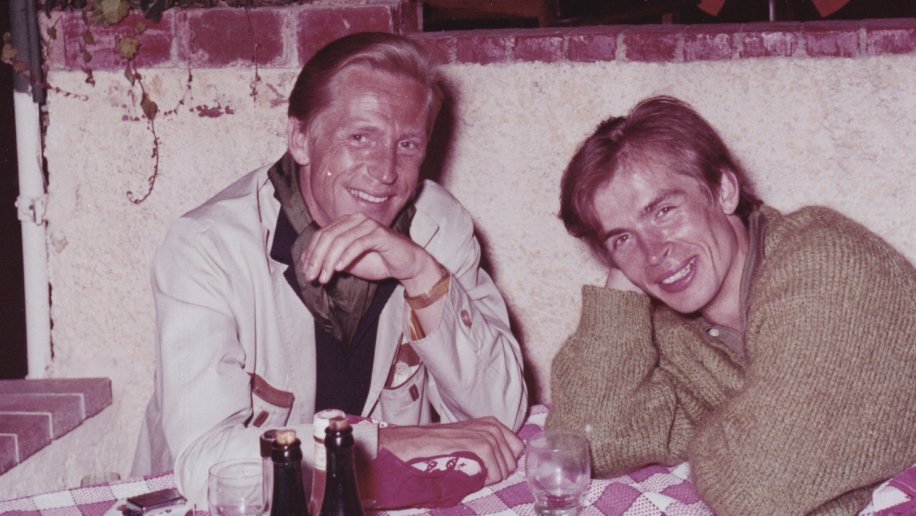
Erik Bruhn: The Burn of Ice
Nureyev and Fonteyn: A Taming of Sorts
The Royal Ballet Years: The Cuckoosha
The Sixties: Rudi Mania